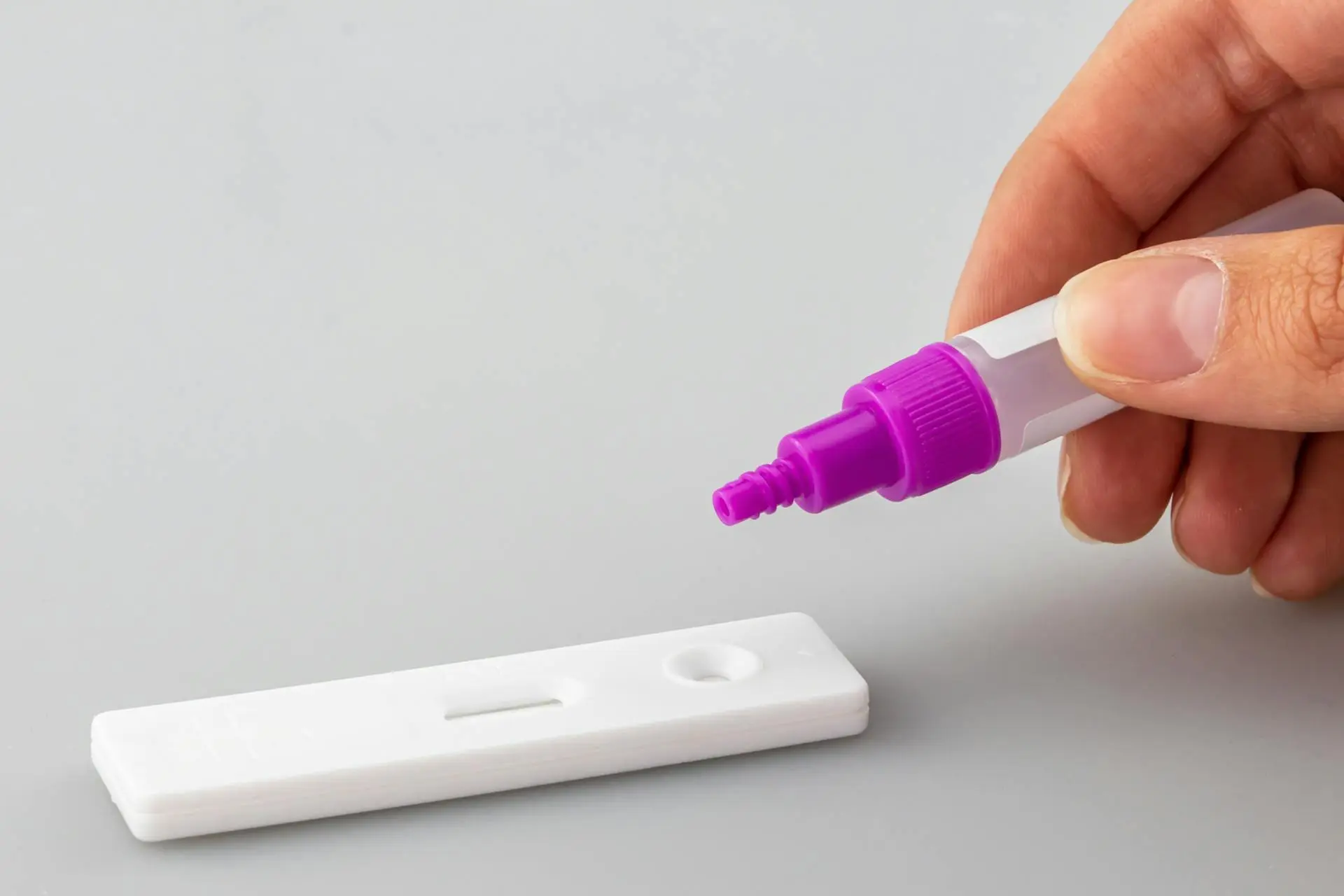
Seeing a faint line on a pregnancy test can trigger excitement, fear, confusion — or all three at once. If you're searching for answers about a pregnancy test evaporation line, you're not alone. Many Nigerian women experience uncertainty after taking a home pregnancy test, especially when a second line appears hours later or looks colorless.
In this detailed guide, you'll learn how to identify an evaporation line, how to avoid it, what it means, and what to do next. We'll also cover brand-specific concerns so you can feel confident interpreting your result.
What Is a Pregnancy Test Evaporation Line?
A pregnancy test evaporation line is a faint, colorless line that may appear in the result window after the urine on the test strip begins to dry.
Home pregnancy tests detect the hormone hCG (human chorionic gonadotropin), which the body produces after implantation. If hCG is present, the test line fills with colored dye (usually pink or blue).
However, when the urine evaporates after the recommended reading time, it can leave behind a shadow or indentation that looks like a second line — even when no hCG is detected.
This is called an evaporation line.
Important: An evaporation line does not mean you are pregnant.
How Pregnancy Tests Work
Understanding how the test works makes it easier to interpret the result correctly.
- You urinate on a test strip.
- The strip reacts to hCG hormone.
- If hCG is present, a colored line appears in the test region.
- A control line appears to confirm the test worked properly.
Most tests should be read within 3–10 minutes, depending on the brand. After that time, the result becomes unreliable.